Behind the Scenes. 12 Juicy Questions with Bestselling Author Lauren Fay
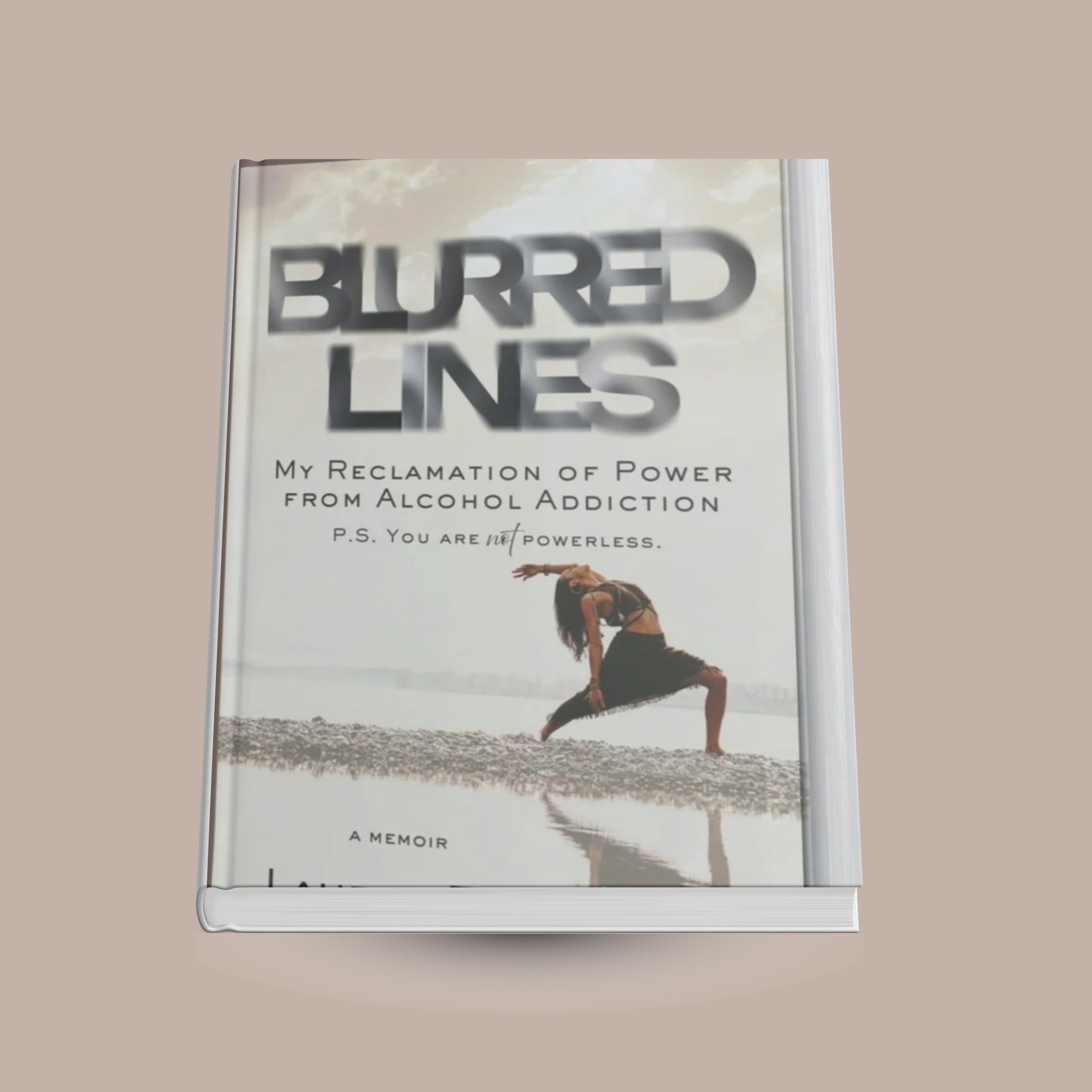
Hello!Book Title: BLURRED LINES: My Reclamation of Power from Alcohol Addiction (P.S. You Are Not Powerless)
Author Name: Lauren Fay

QUESTION 1
What was the moment you knew you HAD to write this book? (Not just wanted to, but felt called to really begin and follow through…)
QUESTION 2
If your book were a conversation with one person who desperately needed to hear it, who would that person be and what would you want them to walk away feeling?QUESTION 3
What’s one story, lesson, or revelation in Blurred Lines that you were scared to share—and why did you share it anyway?QUESTION 4
Take us back to your writing process. Where did you write? What time of day? What rituals or conditions helped you access your deepest truth?QUESTION 5
Was there a moment (or two) during the writing process where you hit a wall or wanted to quit? What got you through it?QUESTION 6
Who or what were your greatest teachers while writing Blurred Lines? (Could be people, experiences, books, spiritual practices, etc.)QUESTION 7
If readers take away only ONE thing from your book, what do you hope it is?QUESTION 8
What surprised you most about yourself through the process of writing and publishing Blurred Lines?QUESTION 9
How has writing Blurred Lines changed you? Who were you when you started versus who you are now?QUESTION 10
What’s a question you wish someone would ask you about this book, but nobody has yet?QUESTION 11
Beyond the book itself, what transformation or impact do you hope your work creates in the world?QUESTION 12
What wisdom would you share with someone who has a book inside them but hasn’t started writing yet?I had been sharing my sobriety journey in real time for years, using Instagram as a kind of living, breathing journal. I was already writing—I just hadn’t called it a book yet. I think I always knew it would become one. It felt inevitable, like it had been unfolding on its own this whole time.
But the moment it shifted from “one day” to now was actually because of someone else’s belief in me. I casually mentioned on an Instagram story that I was thinking about writing a book, and Emily responded with a message that said, “If you write a book, I will support you every step of the way.” And she meant it. She showed up and stayed beside me for the entire journey.
That moment mattered because it confirmed I was being called to share my story in a bigger way. It felt like a responsibility.
If this book were a conversation with one person, it would be with a woman quietly questioning her own life. The one who looks around and thinks, “This isn’t it… this isn’t as good as it gets.” She can feel that something is off, something is missing… but she can’t quite name what or how to change it.
She’s likely high-functioning. From the outside, everything looks fine, maybe even impressive. But internally, she feels disconnected and unfulfilled, like she’s settling in ways she never intended to. She knows she wants more, but she doesn’t know where to begin, or if she’s even allowed to want more.
I want her to walk away from this book feeling seen and understood, first and foremost. But more than that, I want her to feel activated. To recognize that the discomfort she’s feeling isn’t a flaw but an invitation. A signal that she’s ready for something deeper, more aligned, and more true.
And most importantly, I want her to remember that she has a choice. That she is not stuck. That her life can change the moment she decides she’s no longer available for anything less than what she truly desires.
One of the most difficult parts of this book for me to write was the chapter where I opened up about my experience with suicide. It was the first time I had ever spoken about it in that level of detail, and it felt incredibly raw and exposing. Something about putting words to my darkest moment made it feel both real and permanent. I also wrote this chapter after my dog Brody passed away, and in this chapter, he saved my life. So the grief was unmatched. And I had to reprocess the shame of putting him in that situation.
My whole life, people have seen me as someone who has it together. I am driven, disciplined, and successful. That part of my story disrupted that image completely. It revealed just how low my mental and emotional state had actually gotten, and how disconnected and spiritually depleted I had become.
But that was exactly why I knew I had to include it. Pain doesn’t always look the way we expect it to. You can be functioning on the outside and falling apart internally. And if it could happen to me, it can happen to anyone.
Sharing that part of my story was less about vulnerability for vulnerability’s sake and more about creating safety for someone else to see themselves in it, feel less alone, and maybe even find the courage to use their own voice to save their own life.
Most of this book was written in the quiet and darker hours—late at night or early in the morning—when the world felt still enough for me to actually hear myself. I would sit on my couch, wrapped in blankets, laptop on my lap, with my dog Brody by my side. That space became sacred to me. I could soften, the performative “boss girl” walls came down, and the truth could surface.
There wasn’t a rigid ritual in the traditional sense, but there was an emotional one. I had to be willing to go there. To revisit memories, to feel what I had felt, and to stay with it long enough to translate it into words. That required honesty more than anything else, as well as time and space.
I never had a moment where I wanted to walk away from the book, but I did have many moments where I felt completely stopped in my tracks by overwhelm and fear. There were times I found myself spiraling in questions like, “What are people going to think?” “Am I going to get in trouble for sharing this?” “Do I have the capacity to handle criticism or negative reviews?”
Those thoughts didn’t make me want to quit, but they definitely made me freeze.
What helped me move through that wasn’t pretending those fears didn’t exist, but acknowledging them and choosing to keep going anyway. The support of my publisher and writing collective played a huge role in that. Having people who could hold space for both my vision and my fear allowed me to process it rather than get stuck in it.
In the middle of writing this book, Brody passed away. That grief was disorienting, to say the least. It brought everything to a halt, and for a few weeks, I truly didn’t know if I could finish. But in that space of grieving, I was able to reconnect to why I had started in the first place.
I wasn’t just writing for myself. I was writing for the possibility that my story might reach someone at the exact moment they needed it and could change theirs. That purpose carried me through. I knew I had to finish this book, not for me, but for my reader. I kept coming back to the same thought: this is a required conversation. That reminder shifted me out of self-focus and back into service, and that’s what allowed me to keep moving forward.
Some of my greatest teachers while writing this book weren’t traditional teachers at all, but rather experiences that cracked me open and showed me what I was truly capable of holding.
Losing my dog Brody during the writing process was one of those moments. He had been by my side for 11.5 years, and his passing brought a level of grief that was beyond anything I had ever experienced. Around that same season, I also experienced two miscarriages, my mom was diagnosed with breast cancer, and my relationship ended. Each of these experiences deepened my understanding of loss, resilience, and what it means to keep going when life feels unbearably heavy.
They taught me that grief is a passage. It’s something that moves through you and reshapes you, but it doesn’t have to define or stop you.
More than anything, they reinforced my commitment to myself. That there is nothing in this life—no amount of pain, loss, or uncertainty—that will take me out of alignment with my decision to live alcohol-free. My decision to be a sober woman is not conditional on my life being easy, gentle, or fair. It’s part of who I am and who I always will be.
If someone were to take away just one thing from this book, I would want it to be this: you are powerful beyond measure, and your choices carry more weight than you realize.
So much of what we’re taught, especially in conversations around addiction and recovery, centers on the idea of powerlessness. And while I understand where that perspective comes from, my lived experience showed me that even in my lowest moments, when my mental health had reached a point I didn’t think I could come back from, there was still something available to me.
Choice.
It might not have felt loud or obvious, and I might have missed it for years on end, but it was there. And the moment I chose differently, everything changed. It’s the moment I took my life back.
I want readers to understand that their choice is sacred. That choosing themselves again and again is transformative. You don’t need to wait until things get worse or until you hit some externally defined “rock bottom.” The moment you decide that your life matters, that you matter, and you take action accordingly, you begin to reclaim your power.
What surprised me most was how much I genuinely love writing and how natural it felt once I allowed myself to trust it. I never really identified as a writer. I was simply someone sharing her story who loved doing it through writing. Funny how I thought I wouldn’t become a “writer” until I wrote a book—but writing one, let alone in memoir form, was a learning experience, to say the least, and stretched me as a writer in so many ways.
Through this process, I found validation that writing is one of the ways I process, connect, and create meaning. It became a bridge between my internal world and the external one.
I also surprised myself with my ability to take moments that once felt chaotic, painful, or fragmented and shape them into something coherent and purposeful. There’s a level of clarity that comes from writing your story in hindsight. I saw patterns, lessons, and connections that weren’t entirely visible even after eight years of sobriety. In my book, I wrote “Please make it make sense” many times to reflect early sobriety, and as I wrote and things started clicking and connecting, I was like, “Oh my gosh, this all makes sense.”
I also saw that my words could truly move people. That something I had lived through could become something that resonates deeply with someone else. That realization changed the way I see both my voice and my responsibility to use it.
When I started writing this book, I was still holding parts of my story quietly. Not necessarily hiding them, but not fully owning them either. There were still pieces that felt tender, complicated, or easier to keep to myself. Writing Blurred Lines changed that completely.
It required me to sit with my experiences, to name them, to understand them, and ultimately to integrate them. There’s something powerful about putting your story into words in a way that’s intentional and complete. It turns something that once felt overwhelming into something you can hold with clarity.
I am more confident now, not just in my message, but in my truth. There’s a level of self-trust that comes from no longer keeping secrets from yourself or others.
I don’t see my past as something separate from me anymore. My addiction, my recovery, my growth are all part of the same story. And instead of questioning whether I’m allowed to stand in that truth or if I’ll get in trouble if I do, I now fully own it. It’s my story. And I’m allowed to tell my story.
A question I wish more people would ask is: What does it actually mean to choose yourself?
We hear that phrase often, but it can feel abstract or even self-indulgent depending on how it’s interpreted. For me, choosing myself was not about escaping responsibility or avoiding hard things. It was about taking full responsibility for my life.
It meant no longer outsourcing my decisions, my worth, or my direction to other people or external circumstances. It meant being honest about what wasn’t working, even when it was uncomfortable to admit. And it meant being willing to make choices that aligned with my truth, even if they didn’t make sense to others (especially when they didn’t make sense to others).
Choosing myself looked like deciding to stop drinking because I recognized that I deserved more for my life.
It’s not always easy. It requires courage, consistency, devotion, and a willingness to stand on your own decisions. But it is also the most liberating thing I’ve ever done. Once I chose myself and followed through with what I said I wanted, I began to trust myself again, and that literally changes everything.
Beyond the book itself, the impact I hope to create is a shift in how we understand sobriety, choice, and personal power—especially for women.
There is such a deeply ingrained recovery narrative that says we are powerless, that change only comes after things get bad enough, or that sobriety is reserved for those who have reached a certain threshold of struggle. I want to expand that conversation.
I want women to see sobriety not as a restriction, but as an expansion. As a conscious, empowered decision to reclaim their energy and their lives.
My work is really about helping women reconnect with their own authority. To trust themselves again and to recognize that they don’t need permission to change, to want more, or to choose differently. To fall in love with themselves so deeply that they care about what and who has access to them. That they won’t want to ingest the very thing that’s keeping them from their own love.
If you have a book inside of you and you haven’t started yet, my advice is simple: start, even if you don’t feel ready or don’t identify as a “writer.”
You don’t need clarity on the entire story, a perfect outline, or to know if anyone will ever read it. What you need is a willingness to begin.
Write as if no one else is going to see it. Access the truth unfiltered. Your first draft is meant to be messy, honest, and unpolished.
Let writing be a release rather than a performance.
Your voice matters because it’s yours. No one else can tell your story the way you can, with your perspective, your lived experience, and your depth.
What if the very thing you’re hesitant to say is the thing someone else most needs to hear?
Blurred Lines
My Reclamation of Power from Alcohol Addiction (P.S. You Are Not Powerless)
by Lauren Fay